
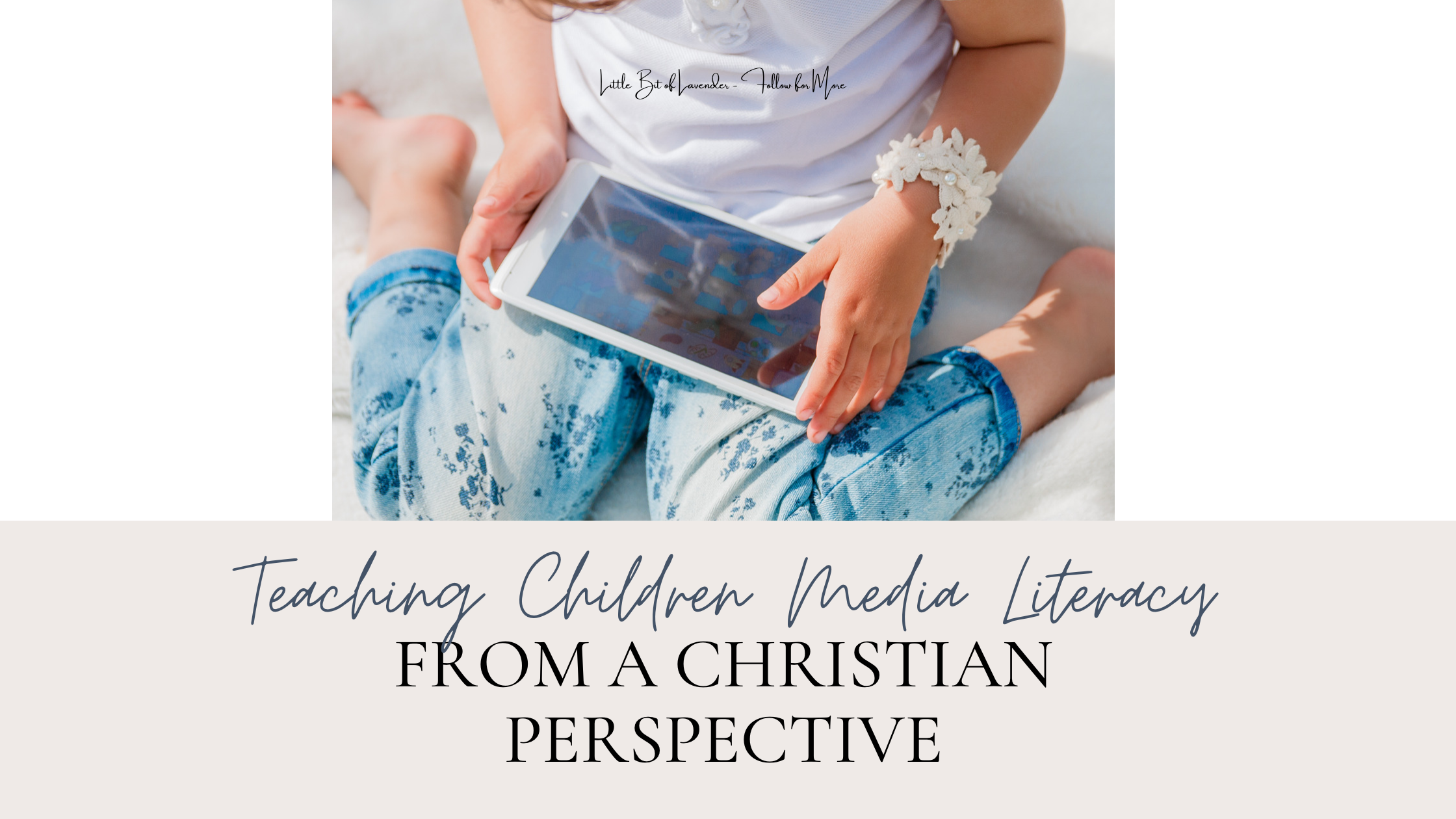
How much television should children watch? What shows are appropriate? Should we be using screens as a form of education for our kids? These are questions that you may find yourself asking. Regardless of the answers, as Christian parents we need to teach our children media literacy from a Christian perspective. Helping them navigate television, social media and books will give them the tools to know right from wrong, even in this changing digital age.
Table of Contents

What is Media Literacy?
Sometimes referred to as “Digital Media Literacy,” this umbrella term is used when referring to educating children (and adults) about the things they see and hear. This includes TV, movies, audio recordings, books, magazines and social media. It is a huge topic and should not be left for schools to teach. Even if you homeschool you should not leave media literacy to just your homeschool curriculum.
As Christian parents, we need to be teaching children about the benefits and dangers of screens, with a Biblical perspective. This means helping them understand the messages in the programming, what is real and what is fake (both in terms of AI and fiction/non-fiction) and when it is time to change the channel or remove ourselves from the distraction.
It is important to make note that children are not born with the ability to navigate media. Children can learn quickly how to use a remote or tablet but that doesn’t mean they have mastered the actual use of the device. Even sitting them in front of educational programs may not be encouraging the Christian home we are hoping for.
So how do we educate our children from a Christian perspective about media literacy?

Christian Perspective of Media
The purpose of this post is to explain some of the areas where children need help to learn about media. Having a Christian perspective doesn’t mean we don’t allow our children to engage with media, it means we are approaching it from scripture.
The Bible may have been written thousands of years ago but God’s word lives and breathes in today’s society. You still will find verses that directly correlate to the use of media and making good choices!
I am including 4 scripture verses I will be referencing which are good verses to use with your children when discussing media and helping them recognize what is good and what isn’t. The free resource that includes these verses is below. Grab the full package here!


Free Resource – Navigating Media From a Christian Perspective
For more information on how to use these verses, grab this free resource! For the full download to help your children navigate the changing digital landscape from a Christian perspective, including printable activities for your kids, click here!

Physical Effects of Screens
I’ll be honest, I’m a stickler for limiting screen time for development reasons. I did not actively encourage my boys to watch screens before they were 18 months old. I would show them short videos and we would dance along or we would watch personal photos or videos of family but I did not offer children’s television and encourage them to sit and watch.

My oldest loves TV and immediately jumped on the television bandwagon once we did start. My second born could care less what his brother is watching, he’s more interested in playing. Which is perfectly fine by me.
However, the research says that developmentally, children should not be sitting in front of a screen before 18 months because it hinders language development. Without the facial expressions and interactions that are in real-time, children aren’t learning anything.
They are finding similar results with older children who spend too much time-consuming TV or social media.
As Christian families we know God created us to be social beings, with family units so children can learn from their parents and siblings, and not in an augmented reality.
It is a struggle in today’s society because kids grow accustom to being stimulated by the fast paced movements and sounds on the screen and it can become an addiction.
I struggle with my four-year-old, who can have outbursts when it is time to turn off the TV. I have to keep a tight handle on how long he watches shows because he comes away grumpy, rude and uncooperative…none of which are good Christian qualities!
As parents, we need to be mindful of what scripture says. It may not refer to screen time, but it does say we need to raise children in the way they should go (Proverbs 22:6). We also need to strive for the fruits of the spirit and if your kids are coming away from screens without a single fruit produced, then it may be time to rethink that activity.
Takeaway: Children under 18 months do not benefit developmentally from screen time and older children should be monitored for how much they are consuming as it can negatively impact their cognitive development.

Media for Older Children
All those things I explained are just the action of watching a screen, not to mention the messages being projected on the screen!
In my teaching days, I was shocked by the impact media had on children. Everything from not understanding when a storyline was fictional (not real) to crying in the bathroom because of social media posts that were made about them.
If kids are not actively taught how to understand what they are watching or how to navigate digital social situations, they will grow up with warped understandings of the world around them. Just because something seems real or because someone posted it online does not mean it is true!
How Do You Help Children Manage The Constant Subliminal Messaging in Media?
There are plenty of good Christian programs for children that will teach bible stories and Christian values. Other programs are wholesome but we may need to be present with our children to help them understand story-lines or characters that are unbiblical.
Let’s be real, our kids are going to be exposed to many of these things in the real world. So if we can explain things to them when they are young, in the safety of our own home where children can ask questions with answers that come from scripture, then our children are learning how to identify and navigate some of those situations with grace and love, so our Godly home is not one of hate.
It means having conversations with your children, as they watch or debriefing after they have watched. It’s engaging with them in their screen time activity. It’s reminding them to choose media that is good, honourable, just and pure (Philippians 4:8).
Call it Christian media literacy buthelping your children develop that “God-sense” about a situation, to know when to turn a program off, put a book down or walk away before things go too far.
Children need to learn that while people may choose certain lifestyles, as Christians we can still be friends with them and show them Jesus’ love, but we do not replicate or engage in those activities. Abiding in Christ does not mean shunning the sinful, it means understanding their situation and offering grace from our Heavenly Father.
For our adolescents who are more likely to be bombarded with subliminal messaging, encourage them to continue to grow their “God-sense.” Help them understand when something is not good, honourable, pure, or just (Philippians 4:8) that it is not worth their time. God asks them to be good stewards of their time and to protect their hearts and minds from harm.
Grab the full package of resources including scriptures, information for parents/educators and worksheet pages available here!
Teach your children about how to use media from a Christian perspective!

Social Media
When it comes to social media, my recommendation is to not let your kids engage in it until they are mature enough to handle it (so 16/17). If you want to get them a device to contact them, look into an old “flip phone” without internet access.
As adults, we have trouble controlling ourselves and can spend hours scrolling Facebook, Instagram, Tik Tok and so on. Just look at your own personal usage stats! And let me ask how do you feel after being on social media, do you come away feeling peace and joy? You might feel happy but this happiness wears off quickly and you feel the need to return to the app so the good feeling comes back.
And if you’ve ever experienced backlash after a post or comment on social media it can make you feel miserable. The Bible is clear that we should guard our hearts and minds because everything we do flows from it. You can’t produce good things when you feel discouraged or upset about something!
These same things happen to our teens, with their still developing brains and hormone fluctuations, it can lead to mental health issues, negative body image issues and depression.
So how do we help our kids navigate this? I would approach social media as something you share with them. Practice scrolling through the app, show your child how to block individuals, help them set up privacy settings and explain appropriate internet behaviour.
Remember, once it is on the internet, it’s out there for everyone to see. Do not post personal photos, videos or SENSITIVE information that you do not want people to have access to.
They will likely be using social media into adulthood so getting things set up for them and giving them a safety net (you) to discuss things will help them if issues come up.
I also would set up rules for them:
- Keep your “God-sense” on all the time. If it doesn’t glorify God don’t say it. If God wouldn’t say it about you, don’t believe it. Always go back to the Bible when in doubt.
- Time/location limits for the device – do not let them have it after going to bed or during classroom learning.
- Monitor their activity and set plans together about what to do if inappropriate activity happens towards or about them on social media.
- Do not hesitate to remove the device completely. It is not an essential item for their survival and if it is negatively affecting their physical/mental/emotional health then as a parent you have the right to protect them.
For the full resource to help your children develop their “God-Sense” about media, grab the digital download from Etsy.
Christian parents need to decide what they will allow on their screens as they raise their family. Everyone has their opinions and you need to do what is best for your home. But remember that regardless of what you choose, media will have positive and negative effects on children whether it’s in the form of physical responses to screen time or what they learn from the program.
Takeaway – Children do not know how to make sense of the things they see and hear without help. Talk with them about what they are watching and help them develop their “God-sense” about situations or programs that do not look and feel right.

Video Games
I’ll be honest, I’m not much of a gamer and don’t have a huge amount of background in the world of gaming. However, it is a screen just like everything else we are talking about and should come under the same rules.
What you allow into your home, into your child’s mind will impact them. If you do have gaming consoles (PlayStation, Xbox, Nintendo etc), keep the lines of communication open with your children. Stay on top of what they are playing, how long they are playing and their behaviour surrounding the games.
Set up the guidelines and rules about what you expect. If they do not tow the line then remove access to the device. It can be hard taking things away from our children or following through on what we said we will do, but we are the parents and have to raise our children according to Christian values.
Takeaway: Video games are fun but should have the same guidelines and settings as every other screen in the home. As a parent, it is your job to protect and guide your children in how to use these devices without causing themselves harm.
Other Media To Use Instead of Screens
Of course, there is more than just TV and tablets in our homes! There is media in the form of music, podcasts, audiobooks, books and magazines. These “old school” media sources are a great way to build a Christian home and teach media literacy.
My son gets a monthly kids’ magazine (Clubhouse Jr) from Focus on the Family, which is an exciting mailbox trip full of great stories and activities for him.
I’ve also started finding Christian podcasts and audiobooks for my kids. Fun fact, sometimes we turn on the TV for kids as a way to entertain them while audiobooks will do the same thing. Sometimes children need a little extra stimulation and they can play while listening to stories instead of being glued to a screen.
The other benefit of podcasts or audio is they encourage children to use their imagination to create the story-line in their head. We’ve been listening to a podcast called “The Pond” on Apple Podcasts. Once my boys are older I will also introduce them to Focus on the Family’s radio drama “Adventures in Odyssey.”
If you’re looking for a good podcast for yourself, you can check out my Busy Moms, Christian Homes!
Choose Christian music to play in your home or get some audiobooks to play while your children are colouring or doing quiet time. Let their ears hear the good news God has for them while they go about their day!
Takeaway – media including music, audiobooks and books are a great way to teach children about God without the use of screens. Giving them access to these Biblical materials will help grow their imagination and love for God.
Don’t forget to grab your freebie! This resource is the start to teaching your children about media literacy from a Christian perspective!
Make the Decisions For Your Home
Making these decisions is not easy and you may have to make adjustments to your choices as you go. Technology is a changing landscape, with updates and new apps appearing almost on a monthly basis.
As parents we have to stay diligent in what our children are consuming. There are many benefits to screens and they open up a world of information for children to learn and grow. But it needs to be done in a safe way.
Christian media literacy does not mean we shun the things we are afraid of. Instead we teach our children how to approach technology with Biblical teachings that will provide them with lifelong skills to navigate the changing digital age.
The Bible says to guard our hearts because everything flows from it (Proverbs 4:23). This means being careful about what our eyes and ears consume. Building a Christian home means helping our children make smart choices in what they are watching and listening to.
Teach media literacy in your home from a Christian perspective so your children can learn how to use technology for its benefit and not get drawn into the dangers it can pose. Always go back to the Bible and use scripture as the foundation for your rules and guidelines in your home. The Bible will never change so trust God’s teachings. If what is being consumed isn’t fostering the Christian family you want, then it is time to turn it off, put it away and spend time in God’s word!
Ready for more resources to help navigate media with your children? Check out the digital download Navigating Media Literacy from a Christian Perspective, created specifically for parents and educators to help them teach children about media from Biblical perspectives.








Leave a Reply